A layered approach to skin dehydration: differentiating between surface dryness and deeper dehydration, and providing targeted hydration solutions
Many people attribute dry, tight, and flaky skin to dehydration and simply layer on moisturizing products, often with little success.
In fact, skin dehydration can be categorized into two states: surface dehydration and deep-seated dehydration. These two states have completely different causes, symptoms, and treatment approaches. Surface dehydration is often triggered by external environmental stimuli and is relatively easy to improve; deep-seated dehydration is related to the structure of the stratum corneum and the skin’s ability to retain moisture, requiring a longer treatment period.
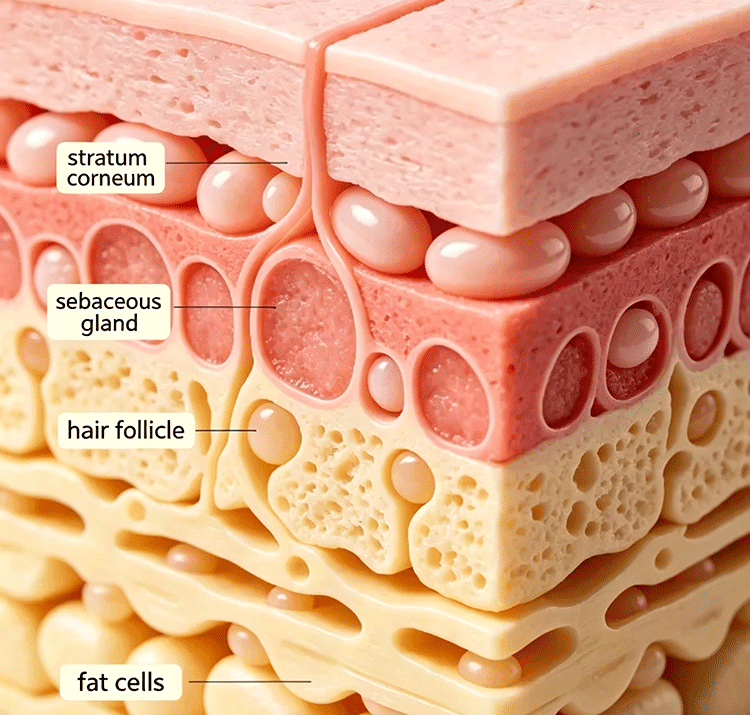
Surface dehydration primarily manifests as temporary tightness, slight peeling, and makeup settling into fine lines, often occurring after seasonal changes, prolonged exposure to air conditioning, or extended sun exposure. Decreased environmental humidity accelerates the evaporation of moisture from the stratum corneum, causing a short-term feeling of dryness. This type of problem only affects the outermost layer of the skin; the internal structure of the stratum corneum remains intact, and its water-locking function is generally healthy, indicating temporary dehydration.
Dehydration in the deeper layers manifests as persistent dryness and roughness, with dryness returning shortly after hydration. Some individuals may experience itching and sensitivity. The core issue here is a damaged skin barrier and an incomplete lipid structure in the stratum corneum, preventing moisture retention. Even with frequent hydration, moisture is quickly lost. Over-cleansing, frequent exfoliation, and long-term use of irritating skincare products are the main causes of deeper layer
dehydration. As we age, the skin’s natural moisturizing factors decrease, gradually exacerbating deeper layer dehydration.
The skincare approach needs to differ depending on the type of dehydration. For surface dehydration, the focus is on immediate hydration and temporary moisture retention. Increase the frequency of toner and hydrating serum use daily, and regularly use a hydrating mask weekly to quickly replenish surface moisture. Simultaneously, improve the humidity of your environment to reduce rapid moisture evaporation.
The core of deep-seated dehydration care is “repair the skin barrier first, then hydrate.” Suspend the use of high-efficacy skincare products, simplify your skincare routine, and focus on gentle cleansing, repair, and basic moisturizing. Avoid washing your face with hot water and vigorous rubbing, which can further damage the stratum corneum. Choose hydrating products with moderate penetration, paired with lightweight skincare products that have occlusive properties to lock in the replenished moisture and gradually repair the skin’s moisture-locking structure.
Each hydrating skincare ingredient has its own focus; choosing the right one for your needs is crucial for effectiveness. Sodium hyaluronate comes in different molecular sizes; large molecules work on the skin’s surface to quickly relieve dryness, while small molecules can penetrate deep into the stratum corneum to replenish deeper layers of moisture. Betaine is a natural moisturizing factor that enhances the stratum corneum’s water-retaining capacity. Ceramides and squalane are used to repair the skin barrier and specifically improve underlying dehydration. Allantoin can relieve sensitivity and discomfort caused by dryness and is suitable for fragile, dehydrated skin.
Internally, the focus is on nourishing yin and moisturizing dryness, maintaining the body’s hydration. Drink small amounts of warm water frequently, and don’t wait until you’re thirsty to hydrate. Increase your intake of foods rich in water and moisturizing properties, and reduce your intake of high-salt foods to prevent excessive water loss. Maintain a regular sleep schedule to ensure your skin’s nighttime self-repair and improve the health of the stratum corneum.
Misjudging your skin’s dehydration level will make your hydration care efforts less effective. To thoroughly improve dryness, a plan needs to be tailored to your skin type and the specific type of dehydration. Leave a comment to accurately assess your skin’s dehydration and receive a customized hydration and repair plan to improve dryness from the inside out.

Leave a comment